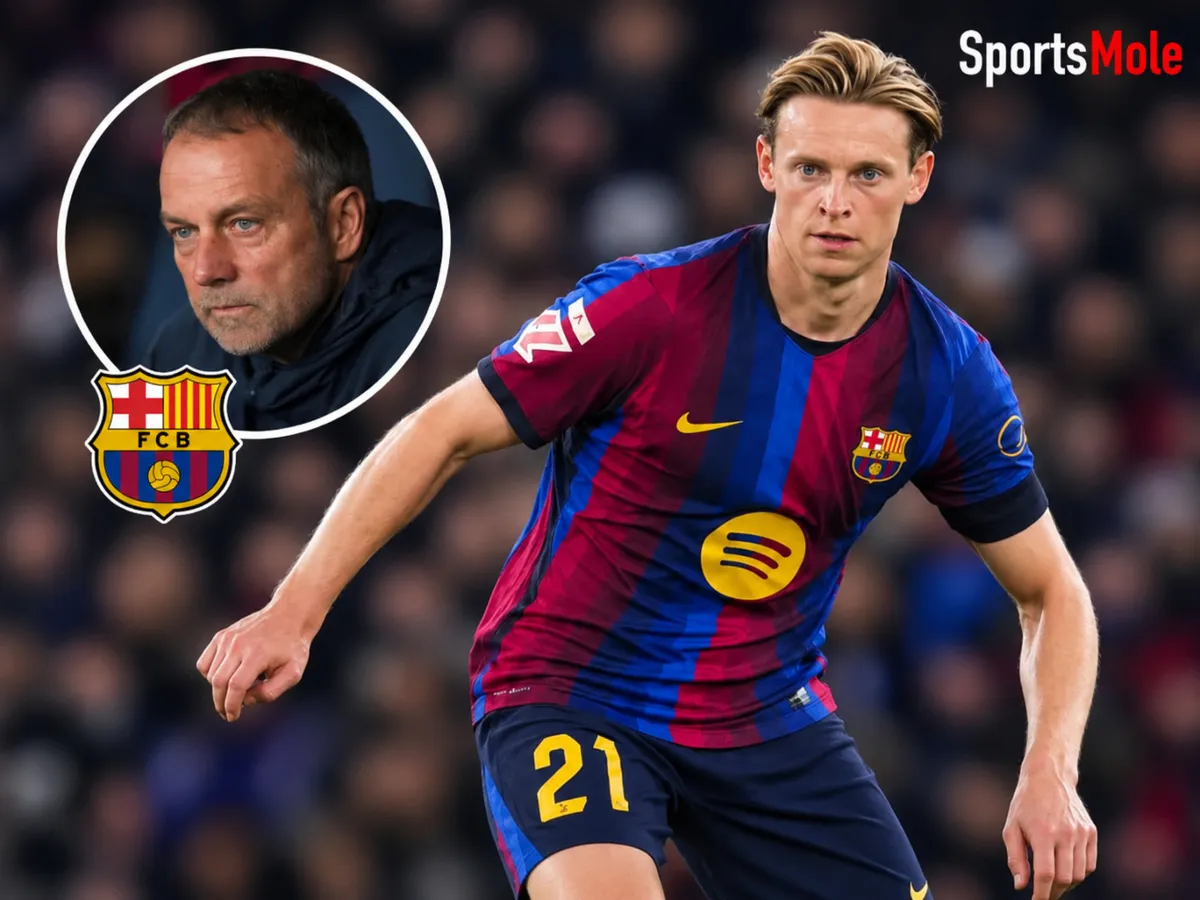
Barcelona head coach Hansi Flick may have found an unexpected way to accommodate Frenkie de Jong in his increasingly competitive squad, with the Netherlands international demonstrating his value in an unfamiliar position during the club's recent victory over Atletico Madrid.
The 29-year-old has endured another injury-disrupted year, while the arrival of Rodri has added further competition to a midfield already featuring Pedri, Gavi, Marc Bernal, Fermin Lopez and Dani Olmo.
Yet De Jong's performance in Barcelona's 2-1 comeback victory over Atletico on November 8 offered a reminder of why Flick continues to regard him as an important member of his squad.
Introduced at half-time with Barcelona trailing, the Dutchman was surprisingly deployed at right-back rather than in his customary midfield role.
The decision helped Barcelona gain control of possession and establish a stronger presence in the opposition half, with De Jong eventually returning to central midfield following another tactical adjustment.
His influence was reflected in the statistics: he completed 65 of his 67 passes, achieving an accuracy rate of 97%, despite playing only 45 minutes.
For a player who has repeatedly faced questions about his future at the Camp Nou, it was another example of how his particular qualities can provide solutions beyond the position traditionally associated with him.
How Frenkie de Jong transformed Barcelona against Atletico Madrid
Flick's decision to introduce De Jong at right-back was particularly significant given Barcelona's difficulties in controlling the first half against Diego Simeone's side.
The German manager replaced Brian Farinas with the former Ajax midfielder, who offered a very different interpretation of the position.
Rather than remaining close to the touchline, De Jong frequently moved into central areas when Barcelona had possession, helping his teammates progress the ball through Atletico's pressure.
His ability to receive under pressure, turn away from opponents and carry possession forward allowed Barcelona to build attacks without relying exclusively on passes from their defenders.
That mobility has been one of De Jong's defining qualities throughout his career, although his contribution does not always translate into goals or assists.
According to Mundo Deportivo, he completed 22 passes in the attacking third against Atletico, more than any other Barcelona player, despite spending the entire first half on the bench.
Barcelona's overall possession increased from 58% before the interval to 68% in the second half, during which they registered 10 attempts on goal and allowed just two.
Those improvements cannot be attributed solely to De Jong, but his introduction provided a technical outlet that had been missing earlier in the contest.
Flick subsequently moved the Dutchman back into midfield after Eric Garcia entered the match, illustrating another advantage of having a player comfortable in several positions.
De Jong has previously been used as a central defender and in more advanced midfield roles, while his experience in Barcelona's build-up play makes him particularly effective when moving between the defensive and midfield lines.
The Atletico performance offered further evidence that his versatility can be valuable even when he is not an automatic starter in his preferred position.
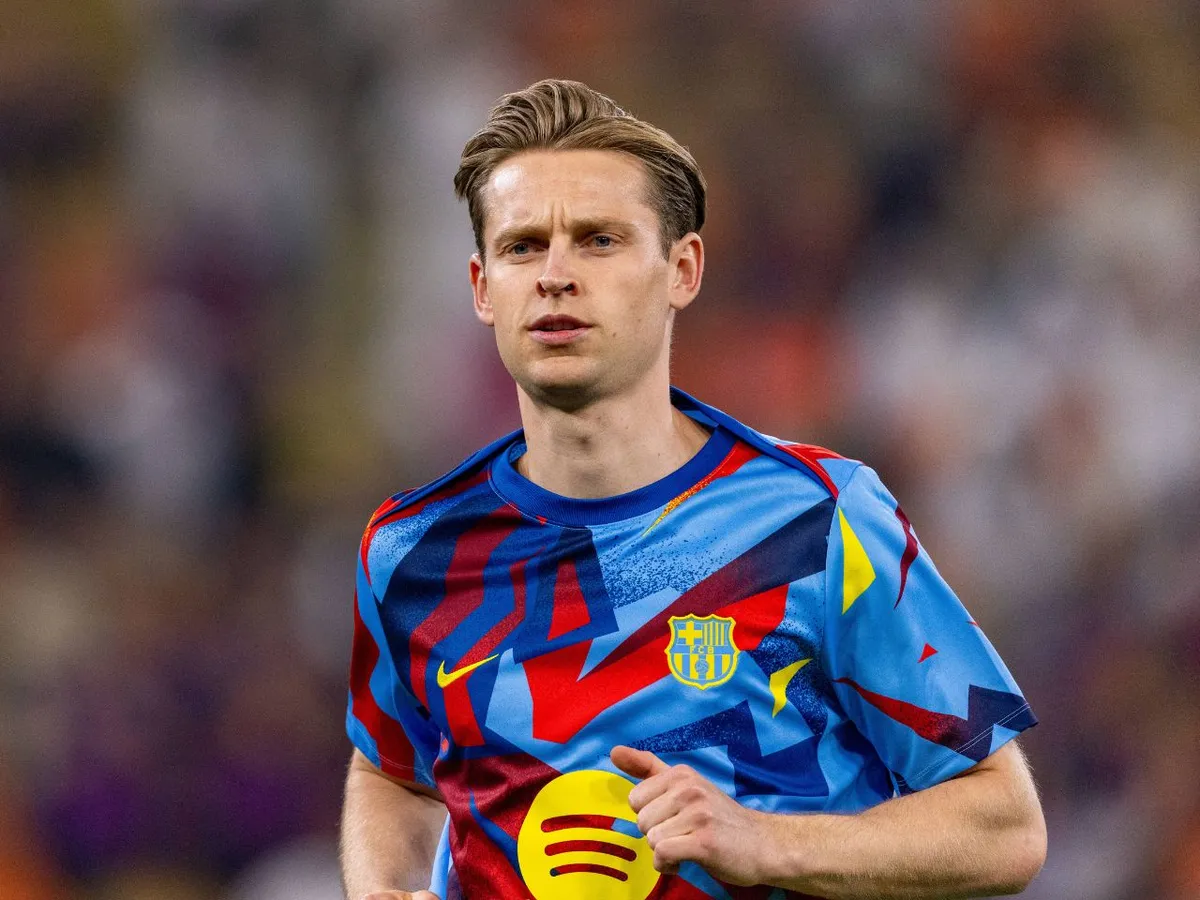
Where does De Jong fit into Flick's Barcelona midfield plans?
De Jong's situation has changed considerably since the summer of 2022, when Manchester United pursued his signature under former Ajax manager Erik ten Hag.
Barcelona were prepared to consider his departure during a period of significant financial difficulties, but the midfielder remained determined to continue his career in Catalonia.
His relationship with the club has subsequently been complicated by questions over deferred wages, recurring injuries and speculation surrounding his importance to successive managers.
Nevertheless, Barcelona demonstrated their commitment to the Dutchman by extending his contract until June 2029 in October last year.
The renewal came despite his difficult injury history, which included the ankle problems that ruled him out of Euro 2024.
He suffered another major setback during the 2026 World Cup, sustaining a knee ligament injury that prevented him from featuring during the opening months of the current campaign.
De Jong eventually returned against Real Madrid on October 25 and recently reached 300 competitive appearances for Barcelona.
However, the arrival of Rodri has created an additional selection challenge for Flick.
The Spanish international offers a more natural defensive presence at the base of midfield, while Pedri remains central to Barcelona's ability to dictate possession and create opportunities.
Gavi, Bernal, Fermin and Olmo provide further alternatives, leaving Flick with considerable flexibility but difficult decisions whenever his midfielders are fit.
De Jong's capacity to operate in several roles could therefore prove particularly useful, especially when Barcelona need additional composure during the early stages of their attacking moves.
His ability to advance with the ball also offers something different from Rodri's positional discipline and Pedri's creativity between the lines.
That does not necessarily mean De Jong will become a regular right-back. His appearance against Atletico was a tactical response to the circumstances of a particular match rather than confirmation of a permanent positional change.
There is also the continuing question of his fitness.
De Jong withdrew from the Netherlands squad during the November international break after experiencing muscular discomfort, although Barcelona subsequently confirmed that the problem was not serious.
The midfielder is expected to be available for Sunday's La Liga encounter with Villarreal, providing Flick with another important option as Rodri continues his recovery from a hamstring injury.
After years in which De Jong was frequently discussed as a potential departure, his recent performances have underlined why Barcelona have been reluctant to give up on him.
His future role may depend less on securing one fixed position in Flick's midfield than on his ability to perform several functions within the same game.

 Frenkie de Jong
 Hansi Flick
 Barcelona