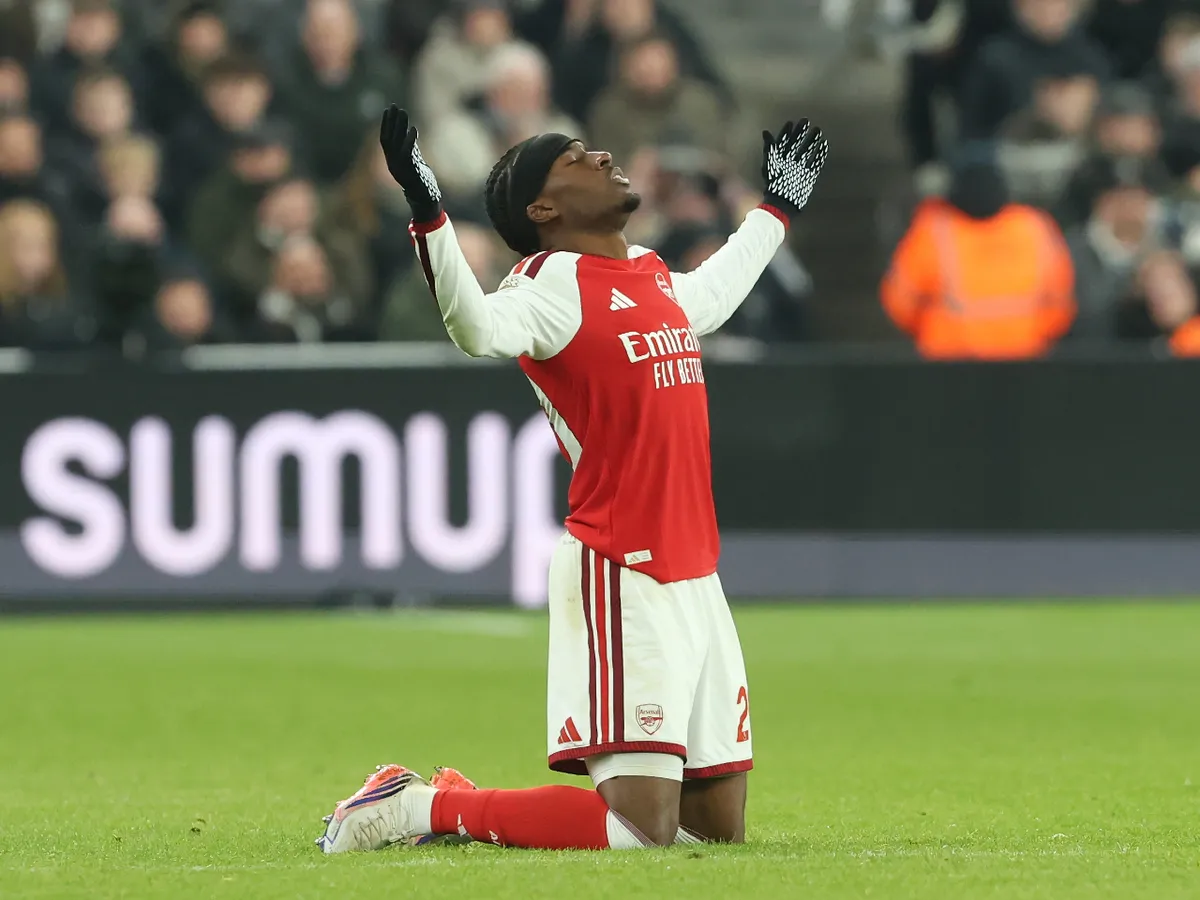
Noni Madueke’s signing for Arsenal divided opinion before the forward had played a game. Signed from Chelsea for £50m, the Englishman joined a squad that already had Bukayo Saka as the owner of the right wing, and he had to justify an investment in a player who initially appeared destined to be a back-up.
A little more than a year later, the discussion is taking on another dimension. With Saka injured, Madueke received a longer run of opportunities and took the space. As well as goals and assists, he has contributed in different roles on both sides of the pitch. The 2-2 draw with Newcastle United, in which he scored the goal that earned Arsenal a point, was another example of that growth.
From individual dribbler to a complete piece in Arteta’s system
Mikel Arteta has noticed a change that goes beyond productivity. In his press conference, the boss highlighted the variety the forward has added to the game and his involvement without the ball.
Madueke has very specific characteristics. Left-footed and explosive, he likes to receive wide on the right, run at the full-back and carry the ball towards the box to shoot or find a team-mate. His short acceleration and ability to change direction make his movements hard to defend when he receives in one-on-one situations.
That characteristic was already visible at Chelsea. In 2024-25, he was one of the Premier League players who progressed the ball towards the box the most and created danger mainly through individual carries. The problem was inconsistency in execution: he did not always choose the best moment. Arteta acknowledged the change.
‘He is becoming decisive in games, and that is what we need from our forwards,’ Arteta said. ‘And he is doing it in various ways, which is something I really like. He has added variety and much more connection to his game.’
The numbers help show the scale of the growth. According to FotMob’s Premier League 2026-27 data, Madueke creates 3.6 chances per 90 minutes, against 1.5 for Saka. It is a significant difference, although Saka has played fewer minutes. The growth also shows in his ability to contribute without the ball. According to Arteta, Madueke does not always need to receive the ball at his feet to take part in the move.
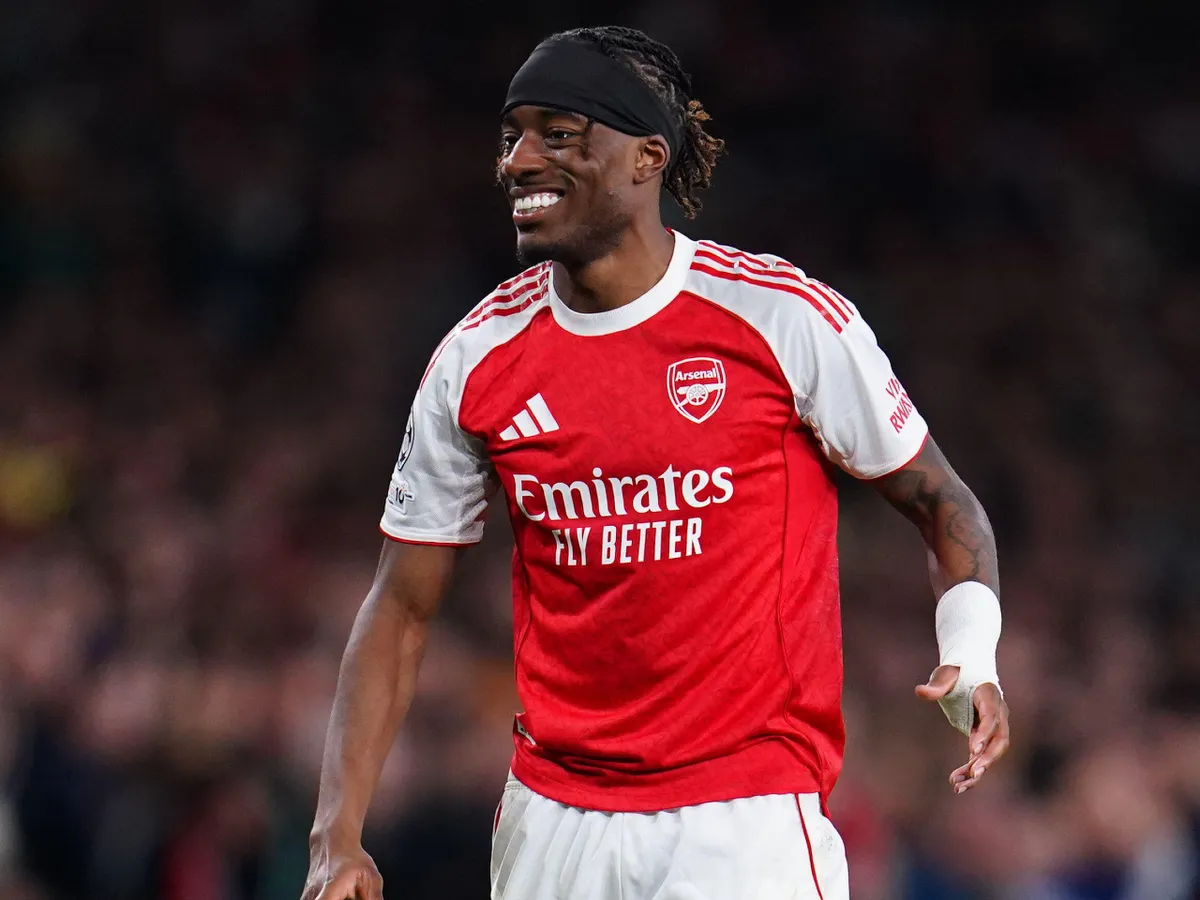
‘And yes, I also love his intensity without the ball,’ Arteta said. ‘So I would say he is becoming a much more complete player, and I think he is enjoying that a lot.’
The development is therefore not about abandoning the dribble, but knowing when to use it. Madueke remains a player of individual initiative, but now seems to understand better how his actions can connect with the collective workings of the team.
Madueke and Saka offer different solutions on the right
Comparison with Saka is inevitable, but the two are not identical. Both are left-footed and prefer to start from the right and move inside, but they do it in different ways. Saka is more refined in decision-making. He has excellent ball control, protects possession under pressure and moves naturally between carries, short passes and crosses. His ability to draw two markers and find the free team-mate is also one of Arsenal’s main attacking tools.
Madueke offers more explosion in the first movement and tends to seek one-on-one duels more often. He is more vertical, liking to accelerate and attack the space left by the full-back. When confident, he can disorganise a defence without relying on a long build-up.
The creation data help illustrate the difference. As well as beating Saka for chances created per 90 minutes in FotMob’s numbers, Madueke also shows a higher volume of dribbles and progressive carries per minute in another statistical comparison this season. Saka, on the other hand, keeps an advantage in shooting and defensive involvement. They are complementary profiles, not necessarily competitors for a single way of playing.
That difference is valuable for Arteta. Against opponents who defend in a low block, Saka may be more useful to control possession, combine with the midfielders and find the pass that breaks down the marking. Madueke can offer a more direct threat, attacking the full-back and creating individual imbalances.
The Englishman has also shown he can play on the left, a role he took on when Christos Tzolis was absent. There he must adapt his movements: instead of cutting inside with his dominant foot, he can go to the byline and cross with his right. It is not necessarily his ideal position, but the versatility widens Arteta’s options and stops the team depending on a single alternative for each side.
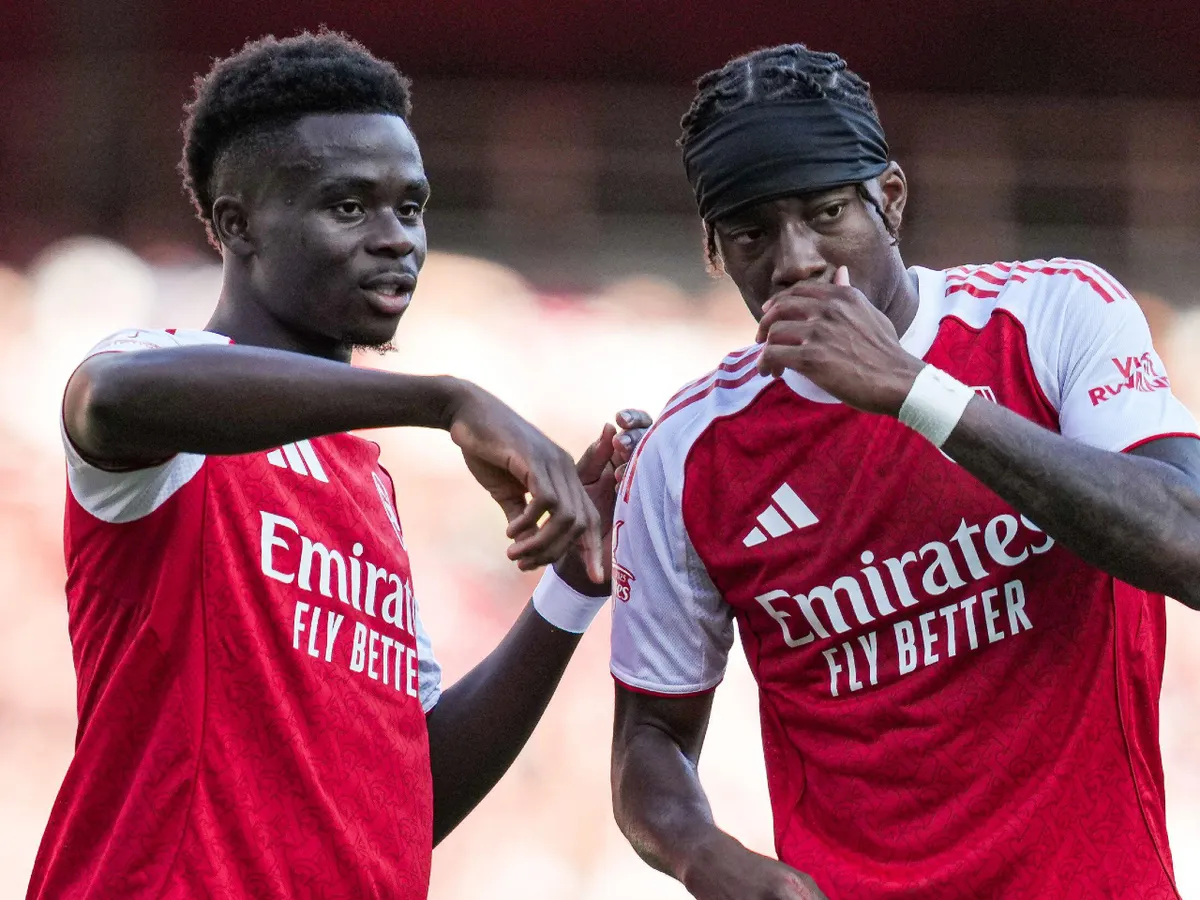
The competition with Saka does not need to be seen as an attempt to remove the starter. Arsenal need more than one player able to decide matches, especially in a long season with the Premier League, Champions League and domestic cups. The point is that Madueke is beginning to offer arguments to be considered more than simple cover.
England omission became fuel for Madueke
One detail of this transformation happened away from Arsenal. After being left out of an England squad, Madueke decided to use the international break to train individually. Instead of treating the period as a chance to rest, the forward sought out a specific preparation programme.
Arteta highlighted the player’s reaction as an example to the rest of the squad. The boss said Madueke came back from the break as a different athlete, determined not to accept the situation he was in.
‘He went to train and came back a different Noni,’ Arteta explained. ‘He was not willing to accept that situation and showed he was determined. Since then, it has been incredible.’
The individual work did not start now, however. In an interview with Sky Sports, Madueke revealed that he has worked for years with specialist coach Saul Isaksson-Hurst, since his time at PSV. The partnership involves technical improvement and individual development, with special attention on being more decisive in the final third.
The result has shown in the numbers: his average of chances created more than doubled compared with the previous season, reaching 3.57 per 90 minutes in the Premier League. His dribble success rate rose from 50 per cent to 55 per cent, while his pass accuracy went from 78 per cent to 87 per cent. In open-play crosses, his success rate jumped from 14 per cent to 33 per cent.
Those numbers help explain why Arteta speaks of a more complete player. Madueke has not stopped looking for the dribble, but has begun to execute other actions better, which could previously limit his influence. The growth combined different reasons and paths, but the result has arrived and is evident in the current season.

 Noni Madueke
 Bukayo Saka
 Arsenal