Barcelona's sporting wage bill is projected to reach around €636m (£550m) in 2026-27 - the same absolute figure recorded when their financial crisis began to intensify in 2019-20 - but one crucial difference makes the number considerably less alarming this time.
The Catalan giants have strengthened Hansi Flick's squad with Rodri, Anthony Gordon, Karim Adeyemi and Gabriel Jesus during a major summer rebuild, while also committing significant money to retaining key members of their existing group.
Those decisions inevitably carry a cost.
Barcelona expect their sporting wage expenditure to climb to its highest level since 2022-23 and return to approximately the same €636m figure recorded in 2019-20.
At first glance, that comparison appears ominous given what followed.
Barca subsequently endured severe financial problems, struggled to register players under La Liga rules and ultimately lost Lionel Messi after being unable to accommodate a new contract.
However, the same €636m does not represent the same burden today.
Barcelona's £550m wage bill now consumes far less revenue
In 2019-20, Barcelona's €636m sporting wage cost represented approximately 74% of the club's revenue.
For 2026-27, the equivalent figure is projected to account for only around 53%.
The difference is explained by the dramatic growth in Barcelona's income.
The club have budgeted for revenue of €1.195bn (£1.03bn) this season after ordinary income surpassed €1bn in 2025-26 for the first time in their history.
That record revenue does not mean Barcelona's wider financial problems have disappeared, but it gives the club considerably more room to absorb their sporting costs than during the worst years of the crisis.
Barcelona's financial vice-president Ferran Olive acknowledged at the club's General Assembly that player salaries have increased, but stressed that they have risen in line with revenue.
That distinction is particularly important because Barca's current sporting strategy is built around keeping rather than dismantling Flick's squad.
Lamine Yamal, Pedri and Pau Cubarsi form part of a valuable young core, while Raphinha is among the senior players the club have moved to secure on improved long-term terms.
The wage increase therefore reflects both summer recruitment and the cost of protecting players Barcelona consider central to their future.
For now, the club have significantly more revenue available to absorb those commitments than they did six years ago.
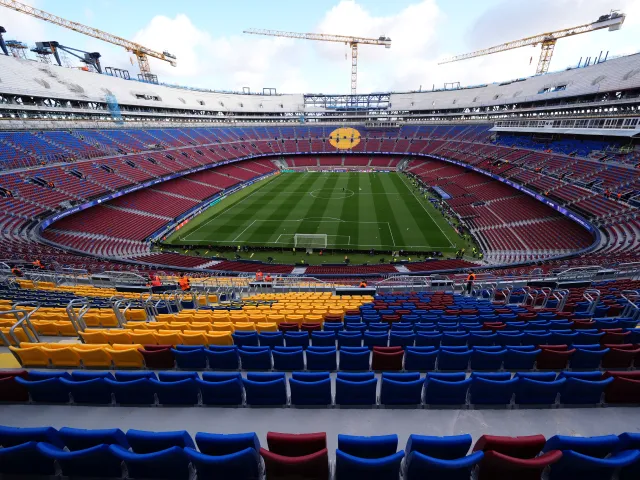
Camp Nou closure could provide Barcelona's next financial test
The greater concern lies further ahead.
Barcelona expect their return to the Spotify Camp Nou throughout 2026-27 to generate around €60m in additional stadium-related income from ticketing, hospitality, museum activity and other commercial areas.
That revenue is helping to support a budget that allows the club to maintain an expensive squad while remaining within its financial targets.
The situation could change again in 2027.
A major phase of the Camp Nou redevelopment is scheduled to involve the installation of the stadium's new roof, with Barcelona preparing for the possibility of temporarily returning to the Estadi Olimpic Lluis Companys during the first part of the 2027-28 season.
The club have requested the option of playing the entire first half of that league campaign at Montjuic as a precaution against construction delays.
That creates an obvious financial challenge.
If Barcelona's sporting costs remain around their current level while stadium income temporarily falls, the wage-to-revenue ratio could start moving in the wrong direction again.
The redevelopment itself is also continuing to require substantial financing.
The Camp Nou project already accounts for a substantial part of Barcelona's wider liabilities, and the club's members have now approved a further €510m funding package, including €300m to complete work at the stadium and another €210m through financing backed by audiovisual revenues.
None of those figures mean Barcelona are returning to the financial position that caused such serious problems earlier in the decade.
Their revenue base is larger, the sporting wage ratio is significantly healthier and the club are once again operating under La Liga's 1:1 financial fair-play rule.
But the comparison with 2019 offers a useful reminder.
Maintaining that balance when Camp Nou revenue is disrupted again will be the next test of how sustainable their recovery really is.

 Barcelona